
Start With the Right Taylorsville Record
A name, address, or date points to a different part of the Taylorsville residents directory. An owner question belongs with the Salt Lake County Assessor and Recorder. A current registration question belongs with Vote.Utah.gov or the County Clerk, and the public lookup asks for a first name, last name, birth date, street, city, and ZIP. A family-history question may begin in a directory or census and end with an obituary, cemetery entry, probate file, or deed. Court questions go to Utah Courts Xchange, which covers public district and justice cases but excludes several protected case types.
Use the smallest source that fits. A property roll can name an owner, but it does not prove who sleeps at the address. A voter match is registration information, not a live occupancy check. A cemetery result can confirm an interment and grave location, but not the person’s last home. These distinctions keep a directory search useful without turning one record into a claim it cannot support.
- Write down the exact name, address, ZIP, middle initial, or date already known.
- Run the Salt Lake County Assessor owner, address, or parcel search and save the parcel ID.
- Use the voter lookup only when the identity and address fields required by its form are available.
- Check Recorder entries, court results, vital indexes, or historical sources that fit the question.
- Ask the actual custodian for a copy or GRAMA review when the online path stops.
Where Taylorsville Records Are Kept
Taylorsville is in Salt Lake County, but Salt Lake City is the county seat. Records sit across city, county, and Utah offices. The Recorder handles deeds, mortgages, liens, plats, and other recorded instruments. The Assessor holds the parcel view, owner field, situs address, mailing address, value, classification, and exemption indicators. County Elections handles voter registration data, while the city handles its own records requests, permits, code cases, cemetery search, and public staff directory.
Salt Lake County Recorder
2001 S State St., Ste N1-600
Salt Lake City, UT
385-468-8145
Recorder Public Search
Salt Lake County Assessor
2001 S State St., N2-600
Salt Lake City, UT
385-468-8000
Assessor Parcel Search
Salt Lake County Elections
2001 S State St., S1-200
Salt Lake City, UT 84190
385-468-7400
Vote.Utah.gov Lookup
For a city permit, complaint, staff record, or municipal file, use the Taylorsville records request route. A county request cannot replace a city request when Taylorsville created the record. For older material, Salt Lake County Archives offers online series and appointment research, with the Utah State Archives serving as another route for older court and government records.
Salt Lake County’s Property Trail
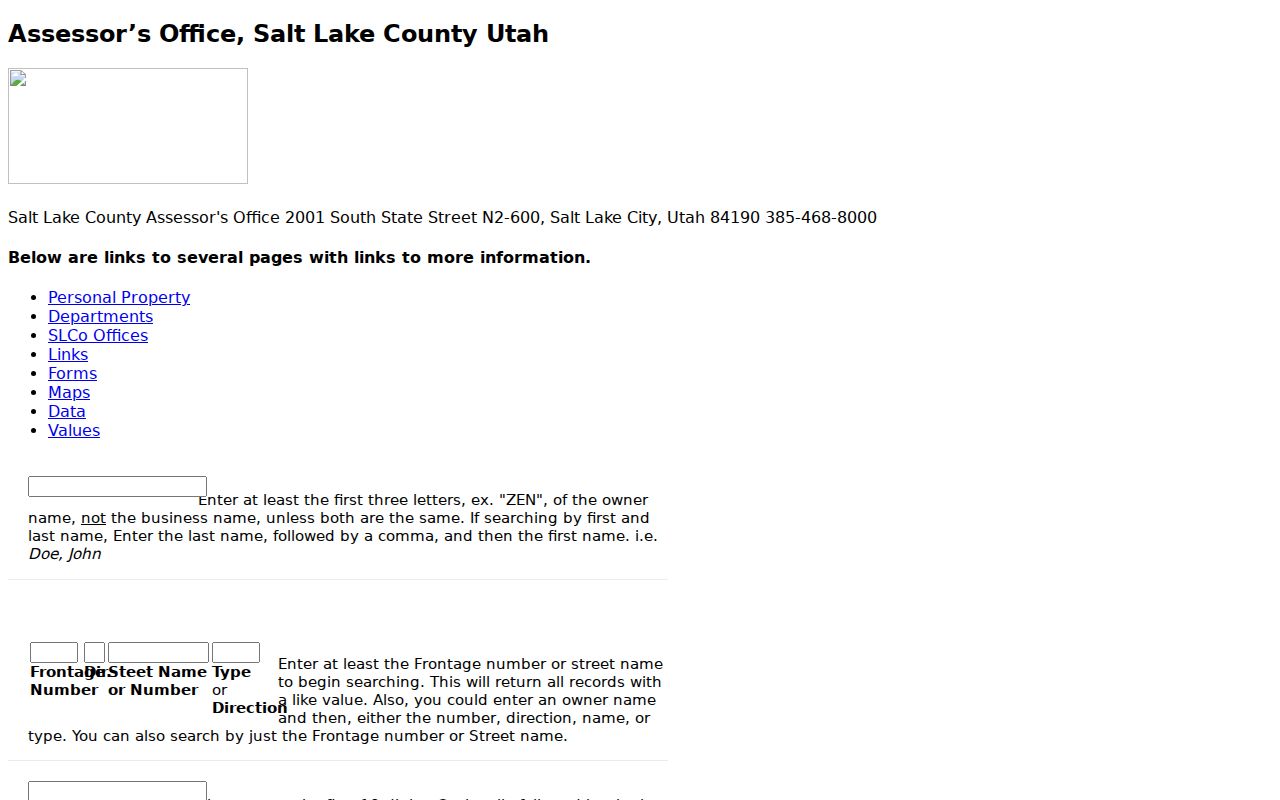
The property side of the Taylorsville residents directory starts with the Assessor’s classic search. It accepts an owner, frontage number, direction, street name or number, type or direction, and parcel number. An owner query uses a last name followed by a comma and first name, with at least the first three letters. Address searches return like-value records, and the first seven digits of a parcel number can show a block because the first four digits identify area or section and the next three identify block.
| Assessor field | What it does |
|---|---|
| Owner | Searches a last name and first name format. |
| Frontage Number | Starts an address search by house number. |
| Dir. and Type | Separates directional and street-type parts. |
| Street Name or Number | Accepts a partial or like-value street query. |
| Parcel Number | Uses the first ten digits, or seven digits for a block search. |
| Search / Reset | Returns a sortable list or clears the form. |
The situs address is the physical parcel. The mailing address is where an owner receives correspondence, and it may be elsewhere. A residential exemption is evidence of a claimed primary domicile, not proof that the owner is present today. The Assessor search interface is the right place to begin, while the Recorder supplies the recorded instrument behind an ownership change.
Salt Lake County’s free Property Watch can send email or text alerts for documents attached to a selected parcel, including parcel number, entry number, document type, and recording date. A duplex may require a number range. Property Watch is not a title search, and a document not attached to a parcel may not trigger an alert.
The Salt Lake County Assessor search shows the address, owner, and parcel tools used to anchor a Taylorsville record search.
Six Fields in the Utah Voter Lookup
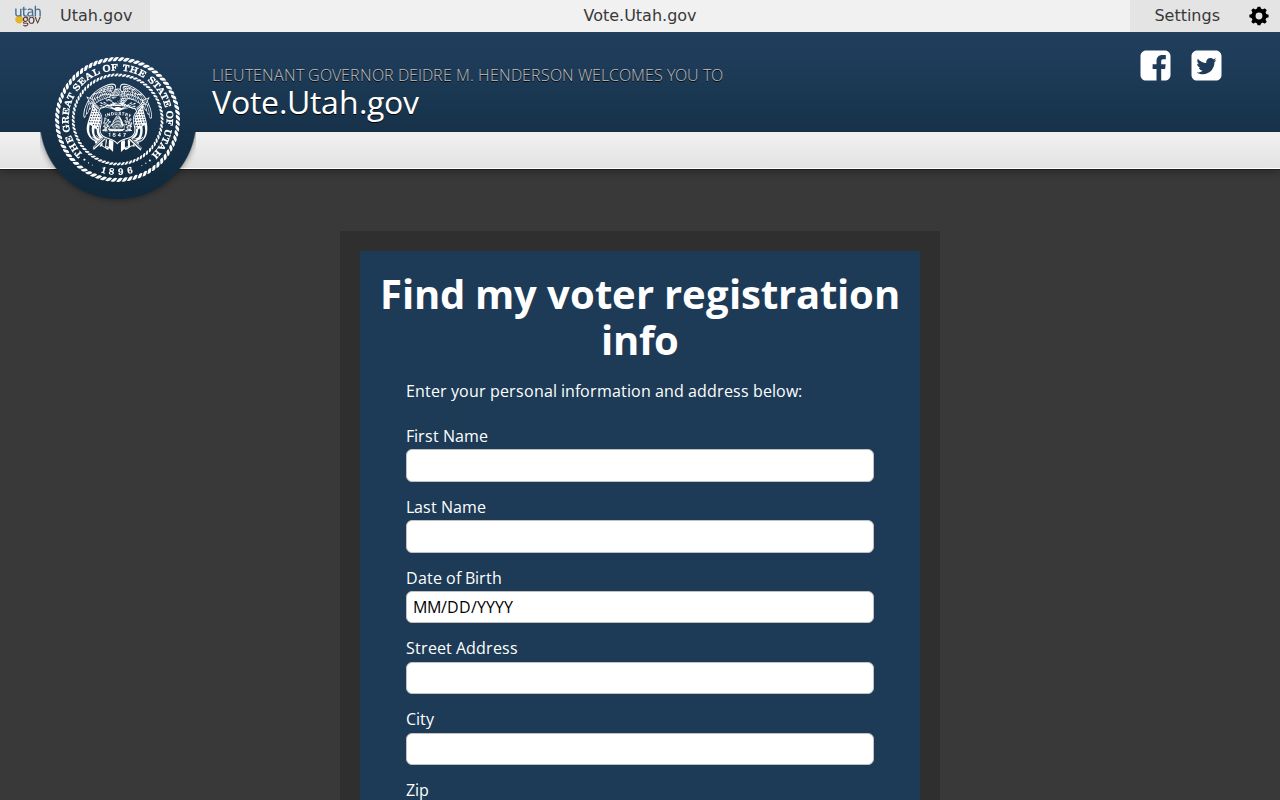
The official voter status form is narrower than a browseable household list. It exposes First Name, Last Name, Date of Birth, Street Address, City, ZIP, and Submit. The form is JavaScript dependent. A matched result can return current registration or polling information, but the search is meant for an individual status check, not a ZIP-only or street-only sweep.
Utah public voter data can include legal name, voter ID, age range, residential and mailing address, precinct, districts, party or unaffiliated status, active or inactive status, update date, and vote history. Full birth date, driver or state ID, Social Security number, and protected fields are not public. The 2026 SB 153 change created At-Risk protection, with May 6, 2026 and May 26, 2026 county deadlines described for protection and release of non-protected information.
The Vote.Utah.gov voter lookup illustrates the identity fields needed before a Taylorsville status check can run.
Practical question: Can a voter lookup list everyone on one Taylorsville street? No. The public self-lookup needs a name and identity details, and the County Clerk does not publish every voter field to every requester.
When a Recorder Search Is Enough
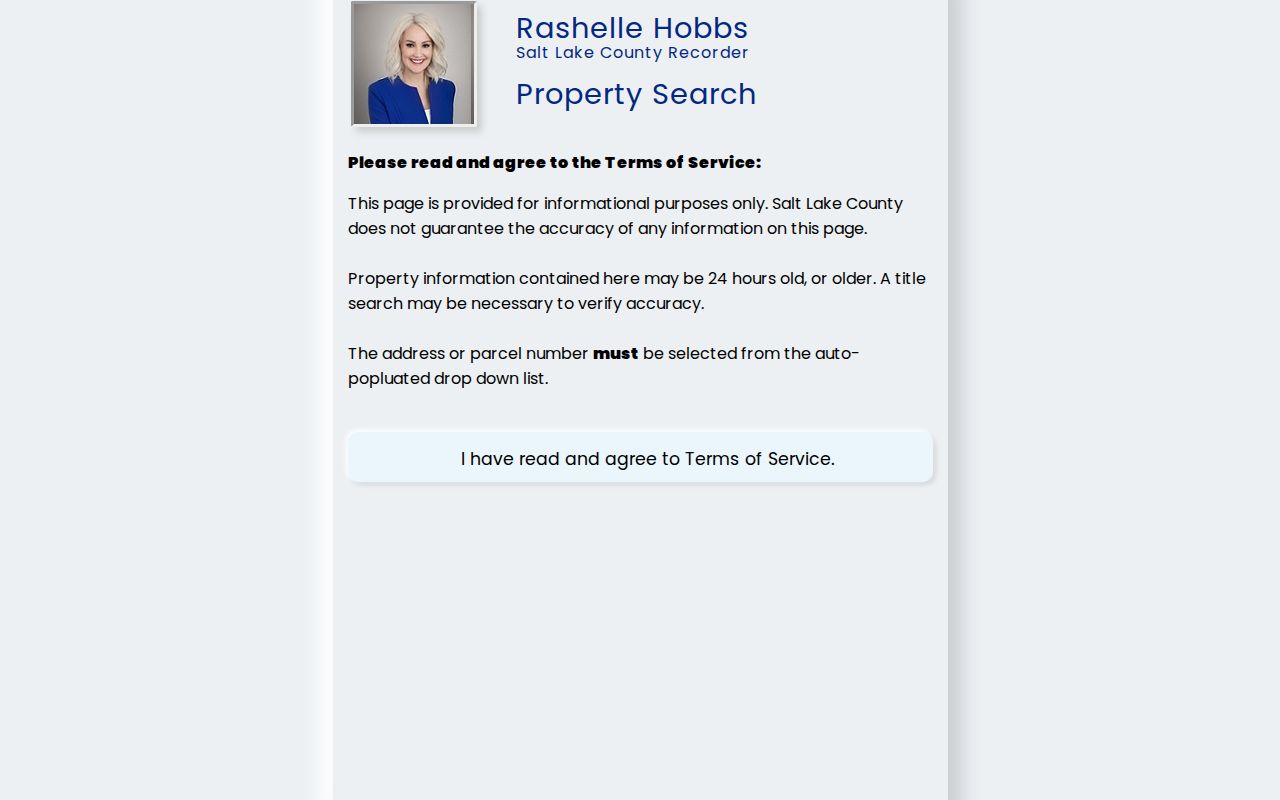
The Recorder’s free Public Search begins with a property or parcel selected from an autocomplete list and an agreement to its terms. It returns a quick document list without a login. The county warns that the information is informational, may be at least a day old, and is not a substitute for a title search. The free gate does not expose every grantor, grantee, date, or document filter, so a deeper chain may need Data Services.
Paid Data Services offers a $5 small package with temporary access for 150 data units or 24 hours. Continuing packages use purchased units without a time limit, and setup may take one to two business days. The service can expose parcel history, legal descriptions, recorded documents, chain of title, tract indexes, subdivision maps, and plats. Images are typically available the next working day. Purchases are online, non-refundable, and non-transferable.
The Recorder Public Search shows the property gate that starts a Taylorsville recorded-document trail.
Copies are another access channel. A Recorder document request asks for the parties, dates, document type, and book/page or index location when known. The office emails when ready. Copies cost $2 per page, historical copies $5 per page, and certification adds $5 plus $2 per page.
One Person, Several Cross-Checks
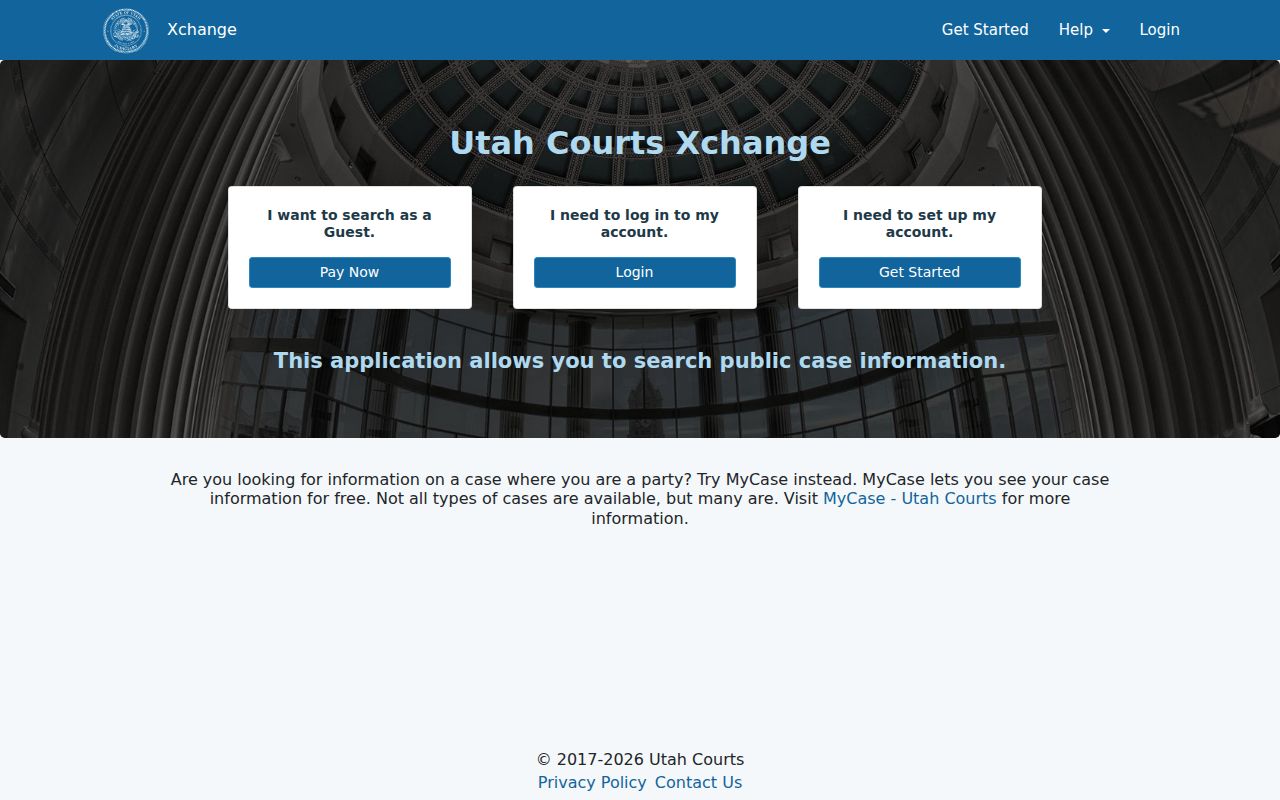
A resident lookup becomes stronger when independent records agree on name, date, place, and role. Utah Courts Xchange searches public district and justice cases by last name, first name, case number, citation, court, county, case type, birth date, and date range. Results can show court, case type, case number, filing date, party type, address when filed, hearings, orders, and disposition. Results cap at 500, and public electronic documents generally cost $1 each. Juvenile, sealed, expunged, adoption, and other restricted material is absent.
Vital records use another route. Salt Lake County offices issue Utah birth and death certificates plus 1978-2010 marriage and divorce abstracts. Archives has births from 1890-1911, deaths from 1847-1949, and marriage licenses from 1887-1904. Birth records open after 100 years, death records after 50 years, and other vital records generally after 75 years. Recent certificates require direct, tangible, legitimate interest, identification, and relationship proof.
The Utah Courts Xchange landing screen is the state starting point for a public Taylorsville court-name search.
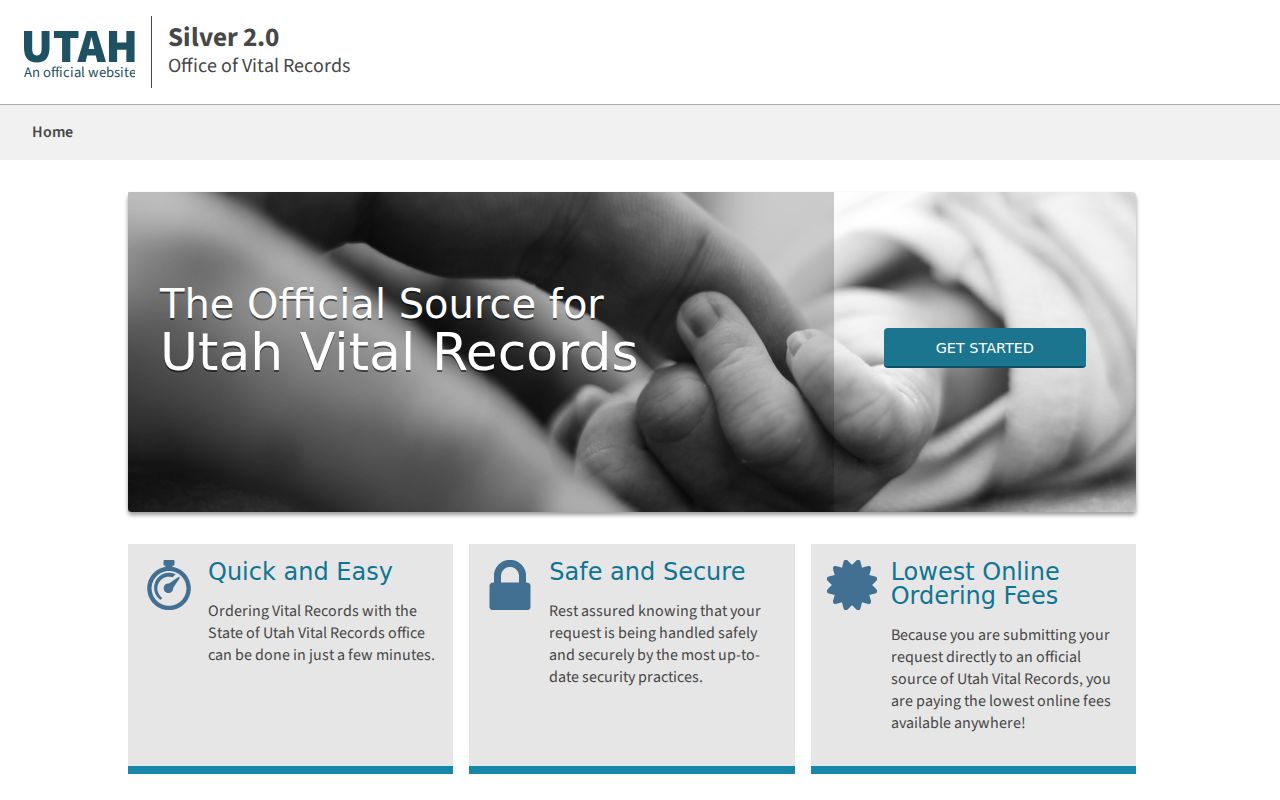
The Utah vital-records portal is the official ordering path for eligible Taylorsville and Utah certificates.
- Roll
- A list maintained for a purpose, such as property assessment or voter registration.
- Index
- A pointer to a record, not always the image or certified document.
- Parcel
- A mapped property unit identified by a county parcel number and legal description.
- Criss-cross directory
- A historical book organized by address or phone so a search can run from place to person.
Taylorsville’s Historical Record Shelf
The historical side of the Taylorsville residents directory reaches beyond one city volume. County Archives has city directories from 1958-1983 and a few later years up to 1999. The University of Utah Marriott Library and Utah History Research Center have near-complete directory sets dating to 1869. Polk directories after 1924 include the “pink pages,” where street and house numbers lead to occupants. The Utah City Directories Collection at Mountain West Digital Library adds books arranged by name, geography, and publisher.
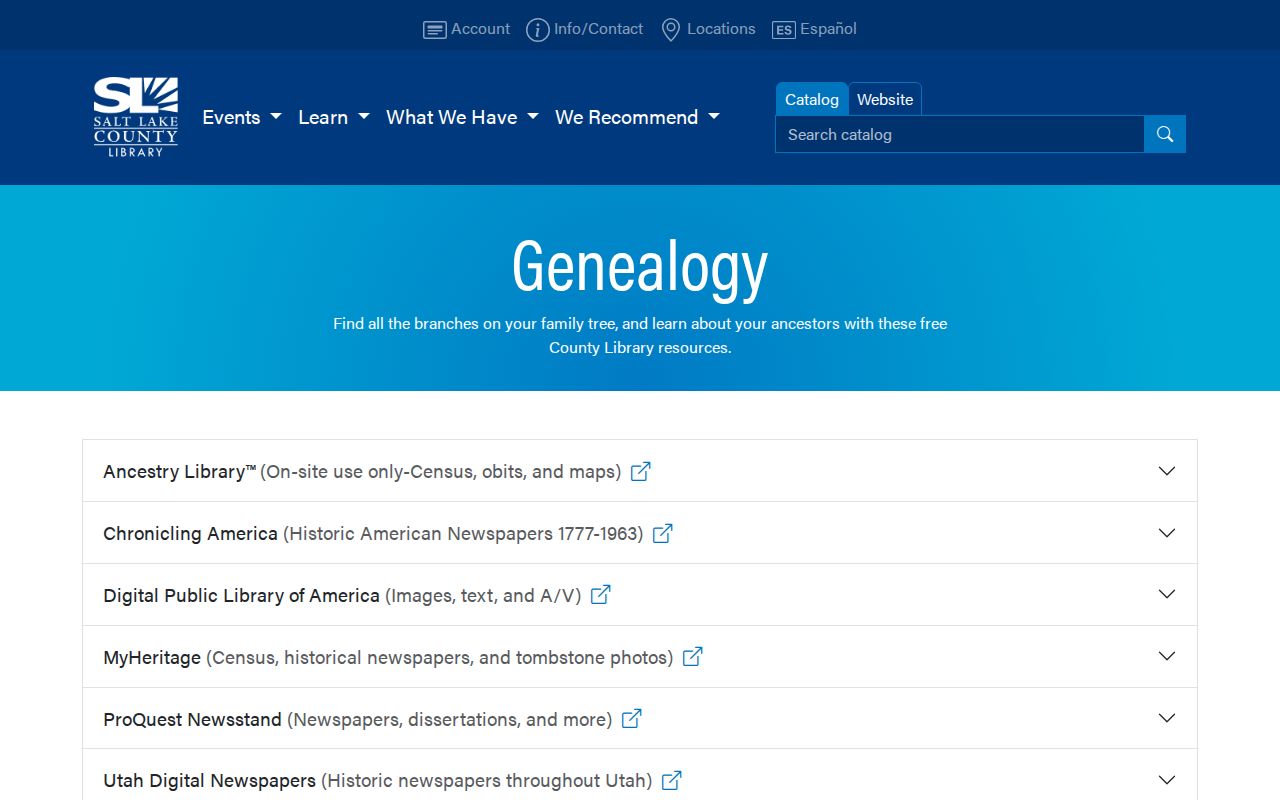
For a prior household, pair one directory year with census years 1900, 1910, 1920, 1930, 1940, and 1950. Newspapers fill gaps, especially before the post-1924 Polk method. The County Library’s Ancestry Library is on-site only, while Utah Digital Newspapers supports keyword, article-title, wedding, death, and birth searches. A full historical trail may also use probate, deeds, cemetery records, maps, and oral histories.
The Salt Lake County Library genealogy resources connect Taylorsville researchers with newspapers, census material, maps, and on-site databases.
Three ZIPs, One Boundary Question
Official material associates Taylorsville addresses with 84118, 84123, and 84129. Nearby 84119 and 84115 references appear in border or service contexts. ZIP codes are postal delivery tools, not city limits. USPS offers ZIP-by-address and city/state modes, while Utah’s UGRC ZIP polygons are approximate. The November 2025 west-side polygon update and February 2026 statewide update improved alignment with address points, but neither created a legal municipal boundary.
For an address search, use USPS for the deliverable form, the Assessor or GIS viewer for the parcel, and the city or county source for jurisdiction. Keep postal city, situs address, mailing address, parcel ID, and legal description as separate fields.
City Records Fill Local Gaps
Taylorsville’s city records request page is the fallback for files created by city departments. Building and planning forms can point to permits, owner-builder declarations, contractors, variances, fences, landscaping, and other applications, but the forms are not a searchable permit index. Plan review may take up to ten business days, and resubmission resets that period. Code Enforcement can hold address-linked complaint and abatement evidence. The public city directory gives names, departments, phone numbers, and work email links for routing, not private home data.
The municipal cemetery search accepts first name, last name, born, died, interred, cemetery, section, block, lot, and veteran filters. Results may show name variants, cemetery location, veteran branch, rank, war service, and memorial information. It can confirm a death or interment date and help separate similar names, but it is not a live resident roll and does not state a last address.
Privacy Has a Real Boundary
Utah GRAMA, Title 63G Chapter 2, gives access to public records while allowing private, controlled, protected, sealed, and other restricted classifications. Safe at Home uses a substitute address for qualifying survivors and protects the actual home address, city or county, precinct, phone, and related identifying details. At-Risk voter records are withheld under the 2026 transition. DMV information is protected under the Driver’s Privacy Protection Act and Utah policy, so vehicle registration cannot become a Taylorsville household list.
Lawful use. Use public records for personal, family-history, civic, reconnecting, and safety purposes. Do not use an address or name to stalk, monitor, threaten, harass, or harm another person.
If a record looks wrong, contact the custodian that created it. The Assessor handles parcel questions, the Recorder handles instruments, Elections handles voter data, the court clerk handles a docket, and vital-record offices handle certificates. A GRAMA request should name the agency, record type, date range, address or parcel, and whether inspection or a copy is wanted. County responses are generally due as soon as reasonably possible and no later than ten business days.
Why Taylorsville’s Name Changes Matter
Older resident records may say Over Jordan, Taylorsville, Bennion, a ward, a precinct, a farm, or a road landmark. Joseph Harker moved west of the Jordan River in 1848, ten families followed in 1849, and the settlement centered between about 4300 and 4800 South by 1850. The area stayed largely agricultural through the 1940s, suburban growth accelerated around 1960, and Taylorsville became a city on July 1, 1996.
That history explains why a name search can need more than a present city label. Use the Taylorsville city directory collections for the historical shelf, and preserve old community terms when searching newspapers, Archives maps, and census pages. No verified citywide street-renumbering year was located, so changed street spelling should be bridged with a parcel, plat, or legal description rather than guessed.
When Portals Do Not Answer
Utah’s Government Records Access and Management Act gives a route to the custodian when a relevant file is not online. A written request should include the requester’s name, mailing address, optional email, daytime phone, and a reasonably specific description. Ask the city, County Clerk, Recorder, Assessor, court, health office, or Archives that actually keeps the record. The usual response is as soon as reasonably possible and no later than ten business days; an eligible public-benefit request may receive an expedited five-business-day response.
Inspection is free under Utah Code Section 63G-2-201, while copies and staff work can carry reasonable actual costs under Section 63G-2-203. A narrow date range and parcel or case number reduce delay. If a record is private or protected, the custodian should explain the access limit. A request should seek an existing record, not ask an office to build a new profile of a person.